Random Tokens in Your Wallet? Why You Shouldn't Touch Them
Strange tokens or NFTs showed up in your crypto wallet? Learn why scammers send them, why selling them can drain your wallet, and how to hide them safely.
Unknown tokens can't hurt your wallet by sitting there. The danger starts when you try to sell, send or "claim" them, so leave them alone and hide them.
You open your wallet and see a token you never bought. Sometimes it shows a huge dollar value. Sometimes it is an NFT that says you have won something. Your first instinct is to sell it, send it back, or click the link to find out what it is.
Don't. In almost every case, that token is bait. This guide explains why random tokens appear, what scammers want you to do with them, and the safe way to deal with them.
Is my wallet hacked?
No. Receiving a token does not mean anyone has access to your wallet. Your wallet address is public, like an email address, and anyone can send tokens to it without your permission. Scammers send the same token to thousands of active addresses at once, much like spam email.
The token itself cannot move your funds. As long as you do not interact with it, your wallet stays as safe as it was before it arrived.
Why scammers send free tokens
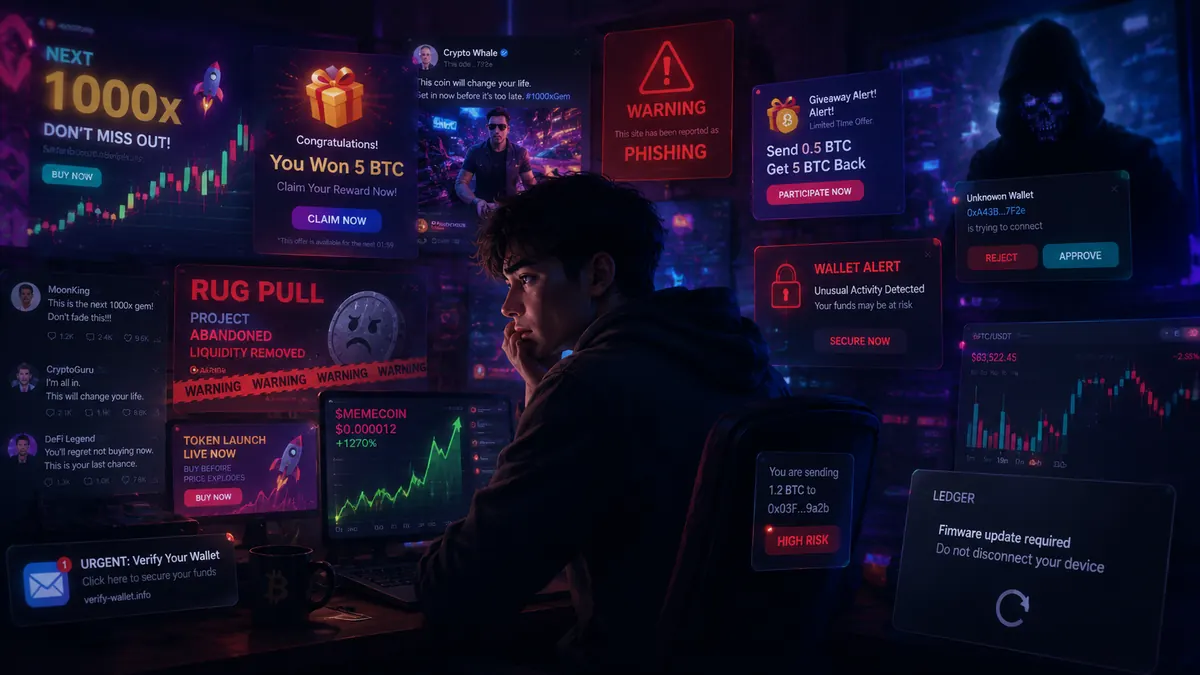
A worthless token costs the scammer very little to create and send. They do it because a small share of people will react, and that reaction is the real attack. The most common tricks are:
- A website in the token name. The token is named something like "Visit claim-reward-site.com" or a message such as "You won 5,000 USDT". The website is a phishing page that asks you to connect your wallet and sign an approval, or to enter your seed phrase.
- A fake dollar value. Some wallets show an estimated price taken from a tiny, manipulated market. You see "$4,800" and want to cash out.
- A trap when you sell. When you try to swap the token, the website or the token's contract asks for an approval that lets it spend your other tokens. Sometimes the swap simply fails after you have paid the fee.
- Look-alike tokens. A fake token with the same name and logo as a real one (for example a fake USDT) can confuse you later when you pick a token to send or swap.
- Address poisoning. A tiny or zero-value transfer from an address that looks like one you use, hoping you copy it from your history next time. We explain this in how to send crypto safely.
What to do when an unknown token appears
- Do nothing with it. Do not sell, swap, send, burn or "return" it, and do not try to add liquidity with it.
- Do not visit any website mentioned in the token name, NFT description or transaction memo, even out of curiosity.
- Hide it. Most wallets let you hide a token or mark it as spam. Look for "Hide token", "Hide spam tokens" or "Hide small balances" in the token menu or settings. You cannot delete a token from the blockchain, but hiding it removes the temptation and the clutter.
- Ignore anyone who messages you about it. "Support agents" on Telegram, Discord or X who offer to help you claim or remove the token are part of the same scam.
How to tell a scam token from a real airdrop
Real airdrops do exist, usually for people who actually used a project. Signs that a token is a scam:
- You never used the project, joined its waitlist or held its tokens before the airdrop.
- The name contains a website, a prize or an urgent instruction.
- It shows a large value, but you cannot find the project on a reputable price site such as CoinGecko.
- The only way to "claim" or sell it is through a link you received with the token.
If you believe an airdrop might be real, go to the project's official website or verified account by typing the address yourself, never through the token. Our airdrop safety guide includes a checklist to run before you sign anything.
What about tiny amounts of Bitcoin? (dusting)
On Bitcoin and similar networks, you may receive a very small amount called "dust". It is usually not a phishing attempt. Instead, some senders use it to trace which addresses belong to the same person when the dust is later spent together with your other coins. If privacy matters to you, avoid spending that dust. Many wallets let you freeze or exclude specific coins from future transactions.
I already interacted with it. What now?
Act quickly, and match your next step to what you did:
- You only opened the website but did not connect or sign: close it. You are very likely fine.
- You connected your wallet and signed an approval or "swap": revoke every approval you do not recognise right away. Follow our guide on how to revoke token approvals, and read wallet approvals explained to understand what you signed.
- You typed your seed phrase anywhere: assume the wallet is compromised. Create a new wallet, move all funds to it immediately, and stop using the old one. Revoking approvals is not enough in this case.
Whatever happened, do not pay anyone who promises to recover your funds. Recovery scams target people right after a loss.
How to protect yourself in future
- Turn on spam or unknown-token hiding in your wallet settings if it has that option.
- Keep your savings in one wallet and use a separate wallet with a small balance for new apps and airdrops.
- Read every wallet pop-up. If it says "approve", "set approval for all" or "permit" when you did not expect it, reject it.
- Check your approvals once a month.
- Never type your seed phrase into a website. Real apps never need it. See how to store a seed phrase safely.
Frequently asked questions
Can I delete a token from my wallet?
No. Tokens live on the blockchain, not in your app. You can hide them so they no longer appear, which is the safest thing to do.
Can a scam token steal my crypto without me doing anything?
Simply holding it does not give the scammer access. Losses happen when you approve, sign or enter your seed phrase on the scammer's site, or when you try to trade the token through a malicious contract.
Why does the token show such a high value?
The price usually comes from a tiny market the scammer controls. There is no real buyer at that price, and trying to sell is exactly what the scam is designed for.
Should I send the token back?
No. Sending it costs you a fee, gains you nothing, and interacting with an unknown token contract is a risk in itself.
The short version
Unknown tokens are spam with a hook. They are harmless while they sit in your wallet and dangerous the moment you try to use them. Don't sell, send or click; hide the token, ignore anyone who contacts you about it, and verify any genuine airdrop through the project's official site.
Stay safe: never share your seed phrase or private key with anyone, including people who say they are support staff.
This guide is for education only and is not financial advice. Crypto prices can fall sharply. Only use money you can afford to lose.
Spotted a mistake or something out of date? Send a correction.