If you are new to crypto, you will often hear people talking about prices moving up or down.
But price alone does not tell the full story. This is where market cap becomes important.
What is market cap?
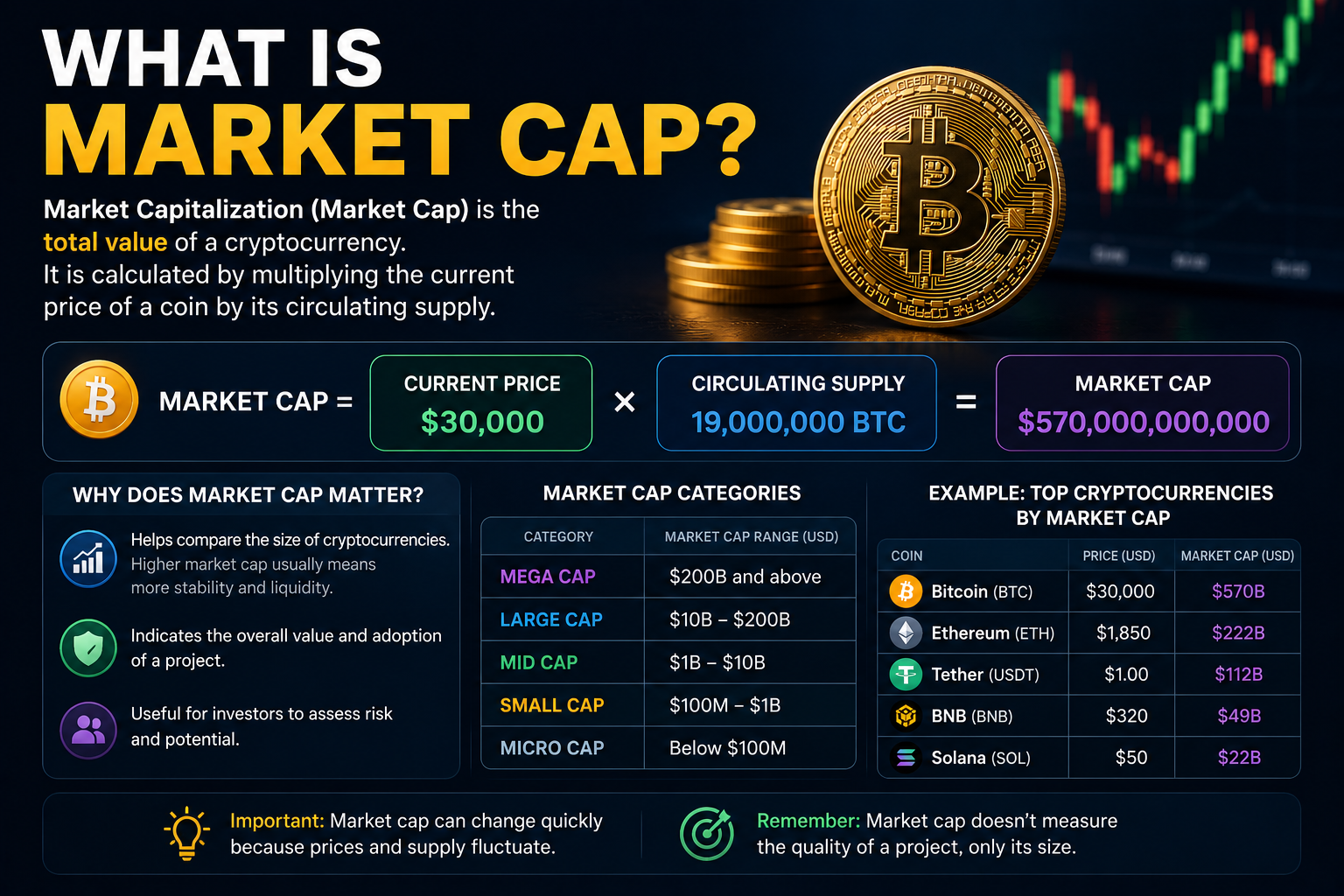
Market capitalization, usually called market cap, shows the total value of a cryptocurrency project.
It is calculated using a simple formula:
For example, if a coin costs $10 and there are 1 million coins in circulation, the market cap would be $10 million.
Why market cap matters more than price
Many beginners assume a low-priced coin is “cheap” and therefore has more growth potential.
In reality, some very cheap coins already have huge market caps because billions of tokens exist.
Market cap helps you understand the actual size of a project, not just how low the token price looks.
Large cap, mid cap, and small cap cryptos
Cryptocurrencies are often grouped into categories based on market size:
- Large Cap: more established and usually lower risk
- Mid Cap: growing projects with moderate risk
- Small Cap: higher volatility and higher risk potential
Bigger market cap projects are generally more stable, while smaller projects can move much faster in both directions.
Common beginner mistakes
- Thinking low price automatically means “cheap”
- Ignoring circulating supply
- Buying hype without understanding project size
Final thoughts
Market cap is one of the simplest but most useful concepts in crypto.
Even if you never trade actively, understanding market cap helps you evaluate projects more realistically and avoid emotional decisions.