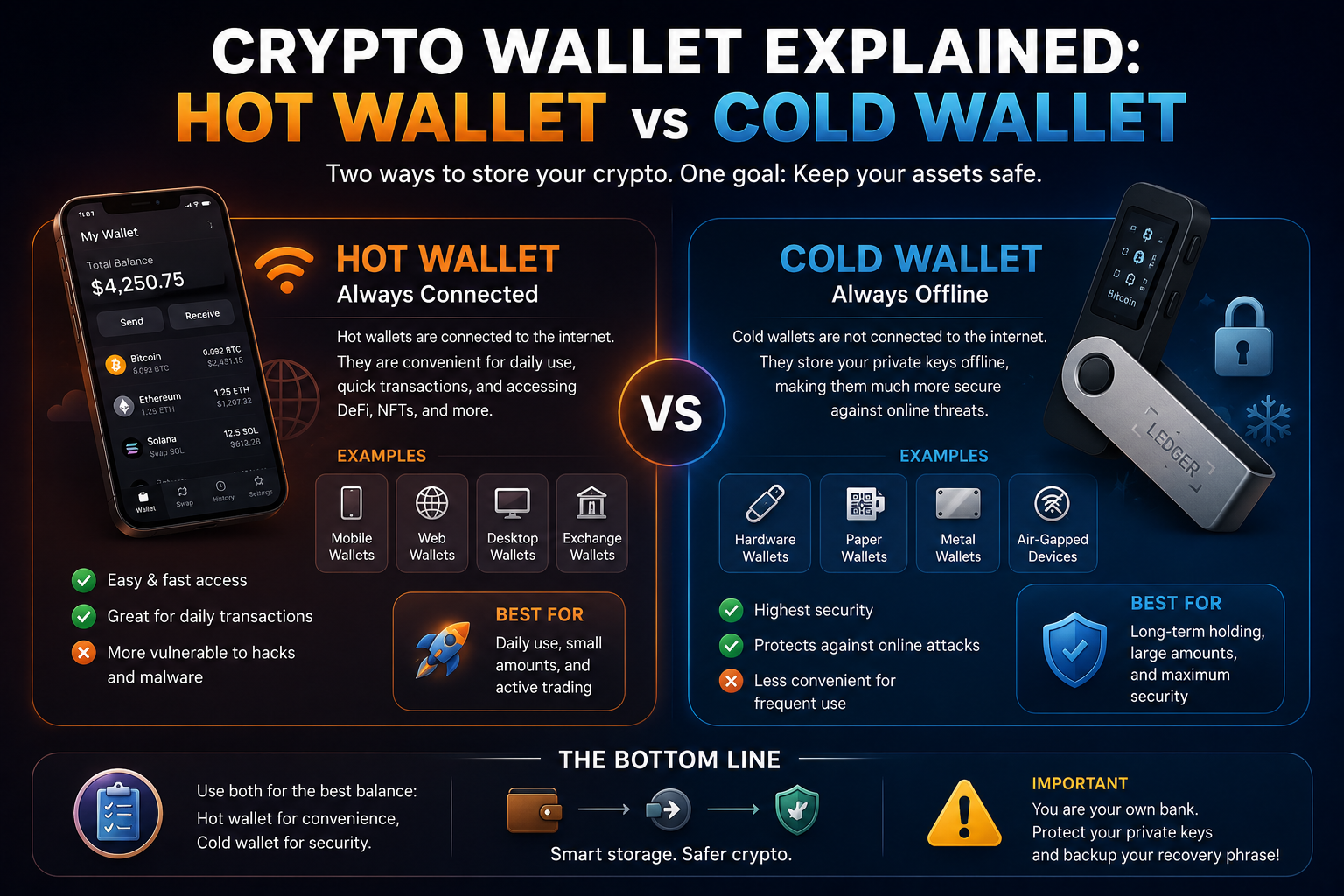
A crypto wallet sounds like a place where your coins live. But it is more accurate to think of it as a key that gives you access to your crypto on the blockchain.
What is a crypto wallet?
A wallet stores your private keys. Those keys prove the crypto is yours. If someone gets your keys or seed phrase, they can take your funds. That is why wallet safety matters.
Hot wallets
Hot wallets are crypto wallets connected to the internet. They are commonly used as mobile apps, browser extensions, or web-based wallets. They are convenient for daily use, swaps, and small amounts.
The advantage of a hot wallet is speed and convenience. The downside is that it is more exposed to phishing links, fake websites, malicious browser extensions, and malware.
Cold wallets
Cold wallets are wallets that keep private keys offline. Hardware wallets are the most common example. They are usually safer for long-term holding because the private keys are not constantly exposed to the internet.
The advantage of a cold wallet is stronger protection for larger amounts. The downside is that it costs money and is less convenient for quick transactions.
What should beginners use?
Beginners can start with a trusted hot wallet for learning, but only with small amounts. If your crypto position grows or you plan to hold for the long term, a cold wallet can be a safer option.
Common beginner mistakes
Many wallet problems happen because users accidentally expose their recovery phrase or approve suspicious transactions. Avoid saving seed phrases in screenshots, cloud notes, or chat apps. Never share private keys with anyone, even if they claim to be support staff.
Final thoughts
Wallet safety is one of the most important skills in crypto. Start simple, use small amounts, learn how wallet approvals work, and treat your recovery phrase like the master key to your money.