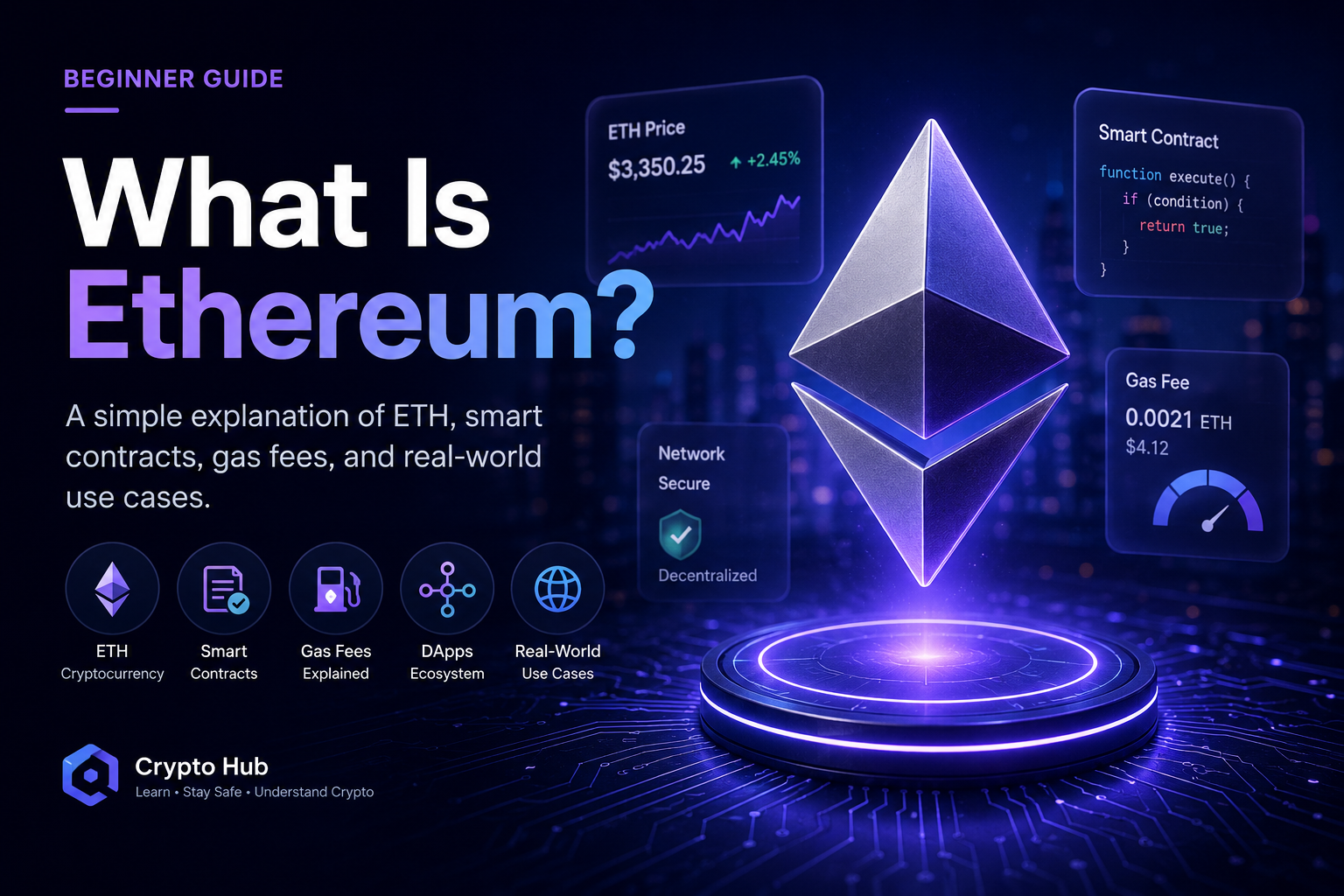
If you’ve spent even a few minutes in the crypto world, you’ve probably heard people talk about Ethereum, ETH, NFTs, DeFi, or smart contracts. For beginners, all of those terms can sound overwhelming at first.
The good news is that Ethereum is actually easier to understand than most people think. Once you understand the basic idea behind it, the rest of crypto starts making much more sense.
What is Ethereum?
Ethereum is a blockchain platform that allows developers to build applications directly on the internet without relying on a central company or server.
Its native cryptocurrency is called ETH (Ethereum). ETH is used to pay transaction fees and power the entire Ethereum ecosystem.
What makes Ethereum different from Bitcoin?
Bitcoin focuses mostly on being a decentralized form of money and a store of value. Ethereum goes further by allowing developers to create smart contracts.
A smart contract is basically code that runs automatically when certain conditions are met. This removes the need for middlemen in many online systems.
- Bitcoin = mainly digital money
- Ethereum = programmable blockchain ecosystem
- ETH = the currency used inside Ethereum
What are smart contracts?
Smart contracts are one of the biggest reasons Ethereum became so popular.
Imagine sending money, trading assets, or signing agreements online without needing a bank or company to approve everything manually. Smart contracts make that possible.
They automatically execute transactions based on rules written in code.
What can Ethereum be used for?
Ethereum is used in many parts of the crypto industry today:
- Decentralized finance (DeFi)
- NFT marketplaces
- Crypto wallets
- Blockchain games
- Stablecoins
- Token creation
- Web3 applications
Many modern crypto projects are built on Ethereum or inspired by Ethereum technology.
What are gas fees?
Every transaction on Ethereum requires a small payment called a gas fee.
Gas fees are paid in ETH and help process transactions across the network. When the network becomes busy, gas fees can become expensive.
This is one reason why some users explore faster or cheaper blockchain alternatives.
Is Ethereum safe?
Ethereum itself is considered one of the most secure blockchain networks in the world. However, users can still lose money through scams, phishing websites, fake wallet apps, or poor security habits.
The blockchain is secure — but users still need to protect their wallets and seed phrases carefully.
Should beginners buy Ethereum?
Ethereum is one of the most widely used cryptocurrencies, which is why many beginners start learning about it early.
That said, crypto prices are volatile. ETH prices can rise quickly, but they can also fall hard during market downturns.
A better approach is to focus on learning first instead of rushing into trading decisions.
Final thoughts
Ethereum changed the crypto industry by introducing smart contracts and programmable blockchain technology. Even if you never buy ETH, understanding Ethereum helps you understand how modern crypto works.
For beginners, the most important step is not chasing hype — it’s learning how the technology actually works before risking money.