Introduction: Beyond Magic Money
For years, many people viewed cryptocurrency as a speculative world of 'magic internet money' and meme coins. However, a major shift is occurring. Large financial institutions like BlackRock are now moving real-world value onto the blockchain. This intersection of traditional finance and digital technology is known as Real World Assets (RWA).
What are Real World Assets (RWA) in Crypto?
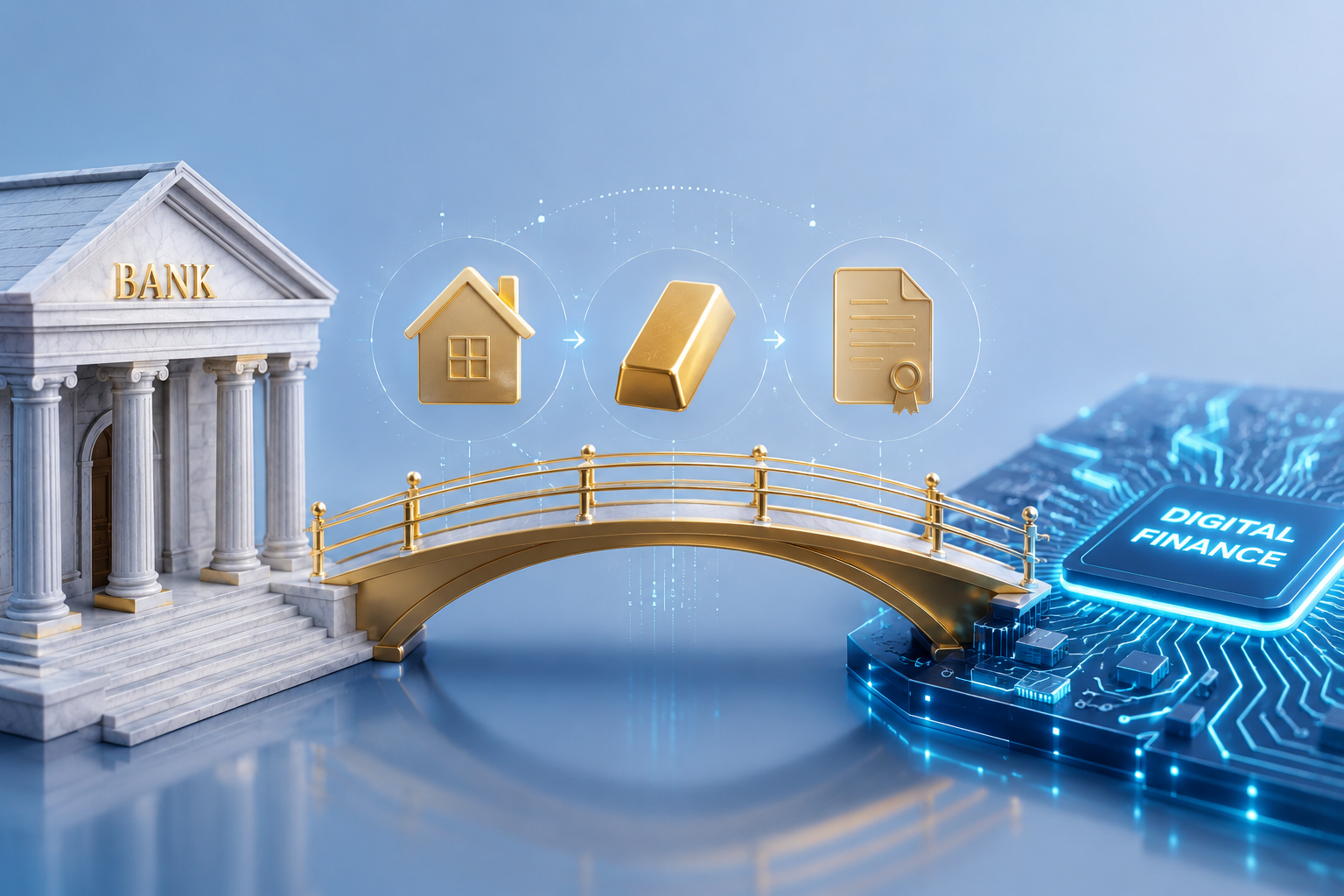
Real World Assets (RWA) refer to physical or traditional financial assets that are brought onto a blockchain. This process is called tokenization. When an asset is tokenized, a digital token is created to represent ownership of that specific asset.
Think of it like a digital receipt that is impossible to forge and easy to trade. Instead of waiting days for a bank to clear a transaction for a piece of property or a gold bar, the ownership can be transferred on-chain in minutes.
What Can Be Tokenized?
- Cash and Equivalents: Stablecoins are the most common RWA, representing the US Dollar.
- Real Estate: Instead of buying a whole house, you could own a token representing 1/100th of a property.
- Commodities: Digital tokens backed by physical gold or silver.
- Government Bonds: Tokenized Treasury bills (T-bills) that allow investors to earn yield on-chain.
The BlackRock Effect: Why RWAs are Gaining Credibility
The entry of BlackRock, the world’s largest asset manager, has significantly boosted the RWA narrative. By launching their own tokenized fund (BUIDL) on the Ethereum blockchain, they have signaled that on-chain finance is no longer a fringe experiment but the future of global markets.
How Does Tokenization Actually Work?
While the technical details are complex, the basic workflow of RWA crypto follows three main steps:
- Off-Chain Formalization: The physical asset (like a house or bond) is appraised, and its legal ownership is verified.
- Information Bridging: Data about the asset is uploaded to a smart contract on the blockchain.
- Token Issuance: Tokens are minted and distributed to investors. These tokens track the value of the underlying asset.
Why Beginners Should Pay Attention
The primary benefit of RWAs for the average person is accessibility. High-value investments that were once reserved for the wealthy—such as commercial real estate or private equity—can now be 'fractionalized.' This allows smaller investors to participate with much lower capital requirements.
Furthermore, because these assets exist on the blockchain, they are more transparent. Anyone can verify the supply of tokens and, in many cases, see the reserves backing them.
A Safety-First Perspective: Risks to Consider
At Crypto Hub, we prioritize safety over hype. While RWAs are an exciting development, they are not without risks:
- Regulatory Risk: Governments are still deciding how to regulate tokenized assets. Laws can change quickly.
- Smart Contract Vulnerabilities: Even if the physical asset is safe, the code governing the digital token could have bugs.
- Custody Risks: You must ensure that the entity holding the physical asset (the custodian) is reputable and audited.
Conclusion
RWAs represent a bridge between the 'old' world of banking and the 'new' world of decentralized finance (DeFi). By bringing tangible value on-chain, the crypto industry is moving toward a more mature, utility-driven era. As always, do your own research, start small, and focus on projects that prioritize transparency and legal compliance.