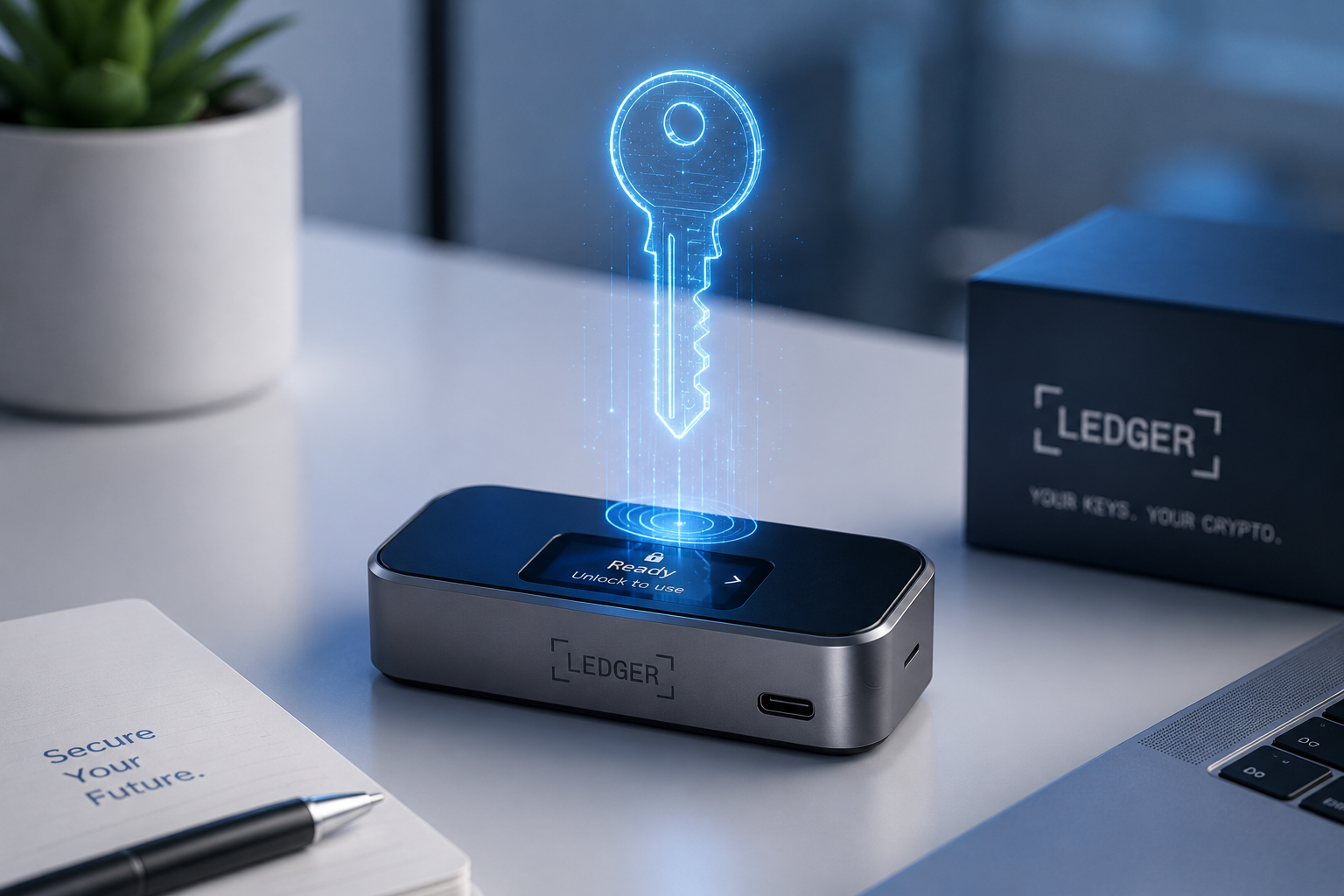
What Does 'Not Your Keys, Not Your Coins' Actually Mean?
In the world of cryptocurrency, there is a golden rule that every beginner should learn on day one: "Not your keys, not your coins." While it might sound like a technical riddle, it is actually a fundamental principle of financial sovereignty. If you keep your Bitcoin or Ethereum on a centralized exchange, you don't technically own them; the exchange owns the 'private keys' to the wallet, and you simply have a claim to those assets.
Understanding Private Keys
Think of a crypto wallet as two parts: a public address (like your email address that anyone can see to send you money) and a private key (like the password to your bank account). Whoever holds the private key has the power to move the funds. When you use a custodial service—like an exchange—they hold the key for you. If the exchange goes bankrupt or gets hacked, your assets could disappear.
Crypto Hub Perspective: We believe in safety first. While exchanges are convenient for buying crypto, they are not intended to be long-term savings accounts. True security starts with moving your assets to a place where only you have the keys.
Custodial vs. Self-Custody Wallets
To navigate the space safely, you need to know the difference between the two main ways to store crypto:
- Custodial Wallets: Managed by a third party (Exchanges like Coinbase or Binance). Convenient for beginners but carries counterparty risk.
- Self-Custody (Non-Custodial) Wallets: You are the only person with access to the keys. You are your own bank.
Hot Wallets vs. Cold Storage
Self-custody usually falls into two categories: Hot Wallets and Cold Storage.
Hot Wallets are apps on your phone or computer (like MetaMask or Trust Wallet). They are connected to the internet, making them convenient for frequent transactions but slightly more vulnerable to malware.
Cold Storage, also known as hardware wallets, are physical devices that keep your private keys completely offline. This is the gold standard for security because hackers cannot reach them via the internet.
Hardware Wallet Guide: Ledger vs. Trezor
If you are serious about protecting your investment, a hardware wallet is a wise choice. Two of the most trusted names in the industry are Ledger and Trezor.
- Ledger: Known for its sleek design and the 'Nano' series. It uses a secure element chip (similar to those in credit cards) to protect data.
- Trezor: One of the original hardware wallets. It is open-source, meaning its code is transparent and can be audited by the community.
Both devices serve the same purpose: they require you to physically press buttons on the device to confirm any transaction, ensuring that no one can steal your funds remotely.
The Golden Rule: Protect Your Seed Phrase
When you set up a self-custody wallet, you will be given a 'seed phrase' (usually 12 or 24 random words). This phrase is the master key to your funds. If your hardware wallet breaks or you lose your phone, this phrase allows you to recover your money on a new device.
Safety Tips for Seed Phrases:
- Never type it into a computer or phone.
- Never take a photo of it.
- Write it on paper or engrave it in metal and hide it in a secure location.
- Anyone who has your seed phrase has your money.
Conclusion
Self-custody might feel intimidating at first, but it is the only way to truly own your digital assets. By moving away from centralized exchanges and using tools like hardware wallets, you remove the risk of third-party failures and take full control of your financial future.