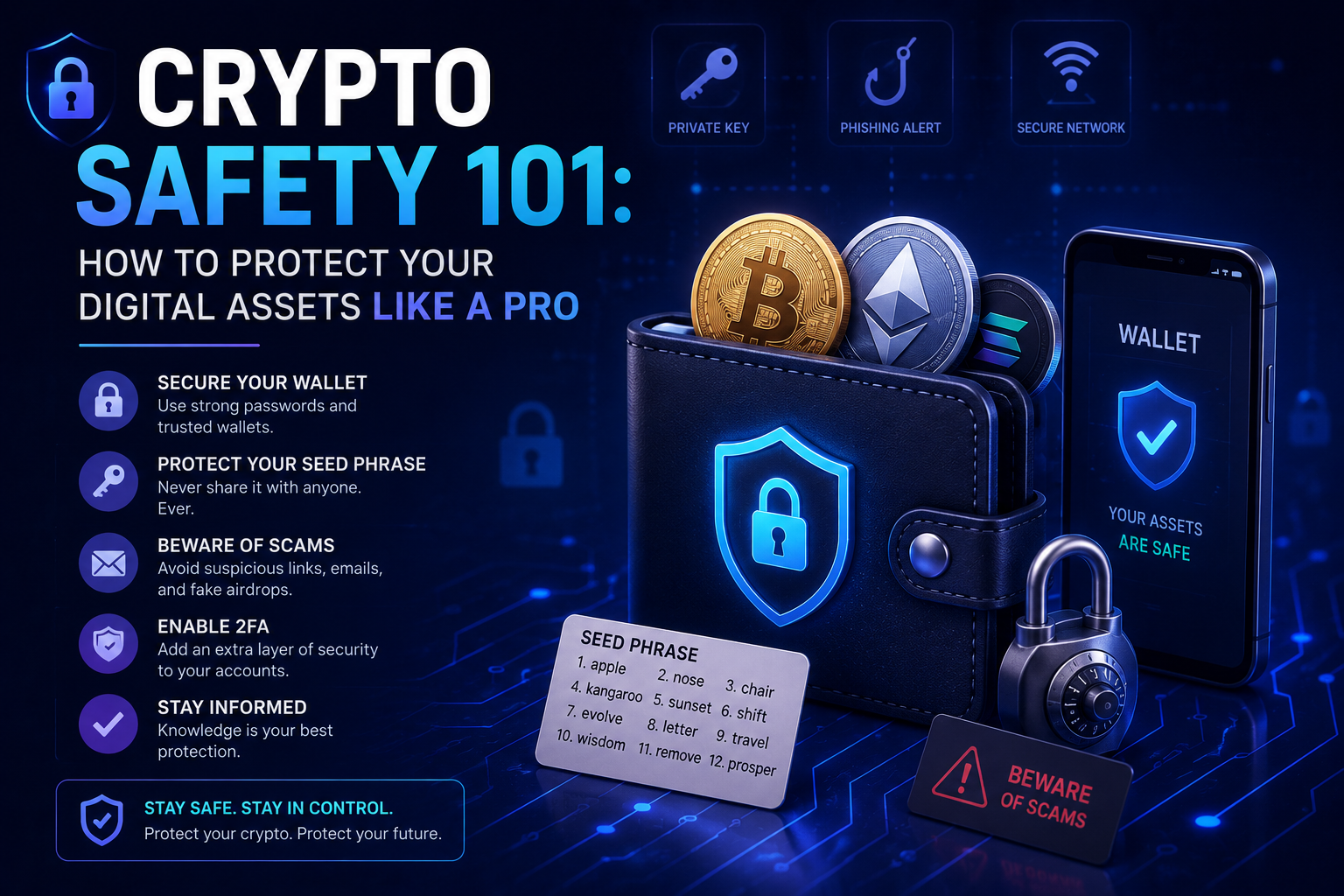
Investing in cryptocurrency can feel overwhelming at first. The market moves fast, scams are common, and unlike traditional banking, there is usually no customer support that can recover lost funds. That is why understanding crypto security is one of the most important skills every investor should learn.
The Foundation of Crypto Safety
One of the most common phrases in crypto is: “Not your keys, not your coins.”
When you store crypto on an exchange, you are trusting that platform to protect your funds. If the exchange is hacked, frozen, or shuts down, your assets could be at risk.
Hot Wallets vs Cold Wallets
Understanding wallets is essential for protecting your digital assets.
Hot Wallets
Hot wallets are connected to the internet. These include mobile apps and browser extensions. They are convenient for daily transactions and beginners, but they are also more vulnerable to malware and phishing attacks.
- Easy to use
- Great for beginners
- Best for small daily amounts
- Higher online security risk
Cold Wallets
Cold wallets, often called hardware wallets, store your private keys offline. Because they are disconnected from the internet, they are much safer for long-term storage.
- Much stronger security
- Ideal for long-term holdings
- Harder for hackers to access
- Less convenient for daily use
Essential Security Habits
1. Use Strong Two-Factor Authentication
Avoid SMS-based authentication whenever possible. Hackers can perform SIM swap attacks to hijack phone numbers. Instead, use authentication apps like Google Authenticator or physical security keys.
2. Protect Your Seed Phrase
Your recovery phrase is the master key to your crypto wallet. Never share it with anyone. Never save it in screenshots, cloud storage, or online notes.
The safest approach is to write your recovery phrase on paper or metal storage and keep it in a secure offline location.
3. Double-Check Wallet Addresses
Scammers often create fake wallet addresses or fake websites that look identical to legitimate ones. Before sending crypto, always verify the first and last few characters of the address carefully.
Common Crypto Scams
Phishing Attacks
Fake emails, fake support chats, and fake websites are designed to steal your login information or wallet access.
Fake Giveaways
If someone promises to “double your Bitcoin” after you send crypto first, it is a scam. Legitimate giveaways never require upfront payments.
Fake Airdrops and Tokens
Sometimes scammers send unknown tokens directly to your wallet. Interacting with suspicious tokens or smart contracts can potentially expose your wallet to malicious activity.
The Human Factor
In many cases, crypto losses happen because of emotions, not technology. Fear of missing out (FOMO), panic buying, and clicking suspicious links are some of the biggest dangers for beginners.
Good crypto security starts with patience, skepticism, and avoiding impulsive decisions.
Crypto Safety Checklist
- Use a hardware wallet for long-term holdings
- Enable secure two-factor authentication
- Keep your seed phrase offline
- Use strong and unique passwords
- Verify every transaction carefully
- Avoid suspicious links and unknown apps
- Never trust guaranteed profit promises