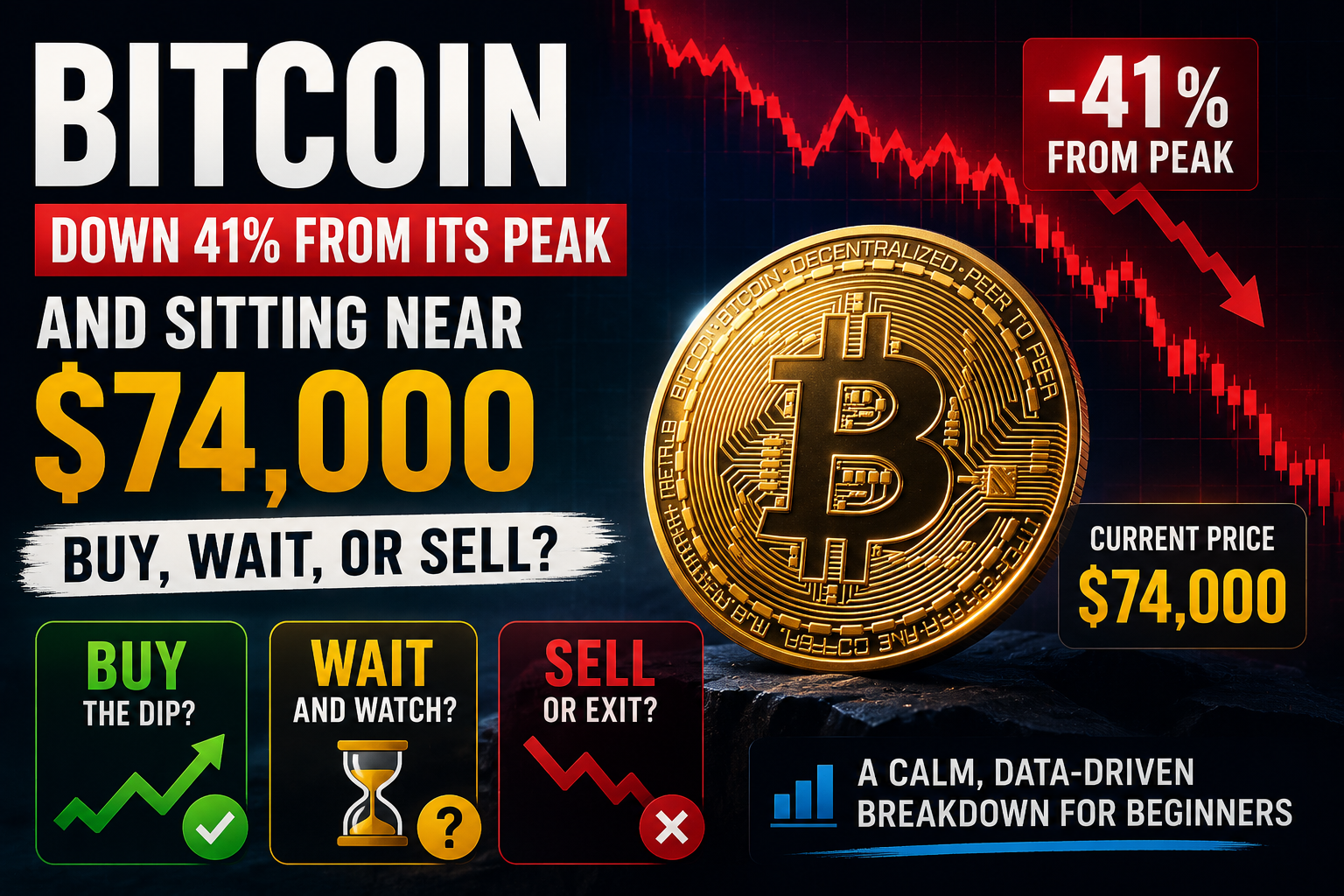
Bitcoin has dropped over 41% from its recent all-time high and is currently trading near $74,000. For many beginners, that number raises an urgent question: is this a buying opportunity, or the beginning of something worse?
This article won't tell you what to do with your money — no one should. But it will give you a clear framework for thinking through the decision calmly, with context that media headlines often skip.
First: What Does a 41% Drop Actually Mean for Bitcoin?
Bitcoin has a long and well-documented history of dramatic price corrections, even during long-term bull markets. Here are some historical examples to put the current drop in perspective:
- 2017 bull run: Bitcoin corrected 30–40% multiple times before reaching $20,000
- 2020–2021 cycle: BTC dropped ~53% in May 2021 before eventually reaching $69,000
- 2022 bear market: BTC fell from $69K to under $16K — a 77% drop over 12 months
A 41% correction from peak is painful, but historically it has occurred within both bull and bear cycles. The correction alone does not tell you whether the bottom is in or whether more downside is coming.
Why Did Bitcoin Drop?
- Macro uncertainty — Interest rate expectations, global equity volatility, and potential IPO-related market disruptions have contributed to risk-off sentiment across markets.
- Profit-taking after all-time highs — When BTC hits new highs, long-term holders and institutions often sell portions of their position. This selling pressure is normal and expected.
- Altcoin rotation — Capital moving from Bitcoin into altcoins like XLM, HBAR, and ALGO temporarily reduces Bitcoin's dominance and price support.
The Three Decisions: A Framework for Beginners
Option 1: Buy the Dip
Some investors see a 41% correction as a discount. This strategy works when the long-term trajectory of the asset remains intact and you have a long time horizon (3–5+ years). Ask yourself before buying:
- Can I afford to hold this even if it drops another 30–50%?
- Am I buying because of genuine conviction, or because I'm afraid of missing out?
- Do I have an emergency fund separate from my crypto allocation?
Dollar-cost averaging (DCA) — buying small fixed amounts regularly rather than a lump sum — is a risk-reduction strategy many beginners use during uncertain periods.
Option 2: Wait and Watch
Doing nothing is a valid and often underrated strategy. If you're unsure, waiting costs you nothing except potential upside — and it protects you from buying into further downside. Good reasons to wait:
- You're not sure whether this is a dip or the start of a longer bear market
- Your financial situation has changed and you need liquidity
- You haven't done enough research to invest with conviction
Option 3: Sell
Selling makes sense in specific circumstances — not because of price alone, but because of your personal situation:
- You invested more than you should have and the stress is affecting your wellbeing
- You have short-term financial needs that outweigh your investment thesis
- Your original reason for buying Bitcoin no longer holds
Selling at $74K after buying at $100K or higher is a loss. But sometimes accepting a loss and rebuilding your position later from a clearer mindset is the right call.
What Experienced Crypto Investors Are Watching
- On-chain data — Are long-term holders selling or holding? Platforms like Glassnode track this in real time.
- Exchange inflows — Large amounts of BTC being moved to exchanges often signal selling intent.
- Bitcoin dominance — If BTC's market share rises, capital may be returning from altcoins — a bullish signal.
- Macroeconomic calendar — Federal Reserve rate decisions, CPI data, and major corporate events can move crypto markets significantly.
The Honest Answer
Nobody knows whether Bitcoin will recover quickly, drop further, or trade sideways for months. Anyone claiming certainty is guessing — or selling you something.
What we do know from Bitcoin's history: investors who entered at almost any point and held for 4–5 years came out ahead. That doesn't guarantee the future, but it provides context for how long-term holders think about corrections.