What Are Smart Contracts?
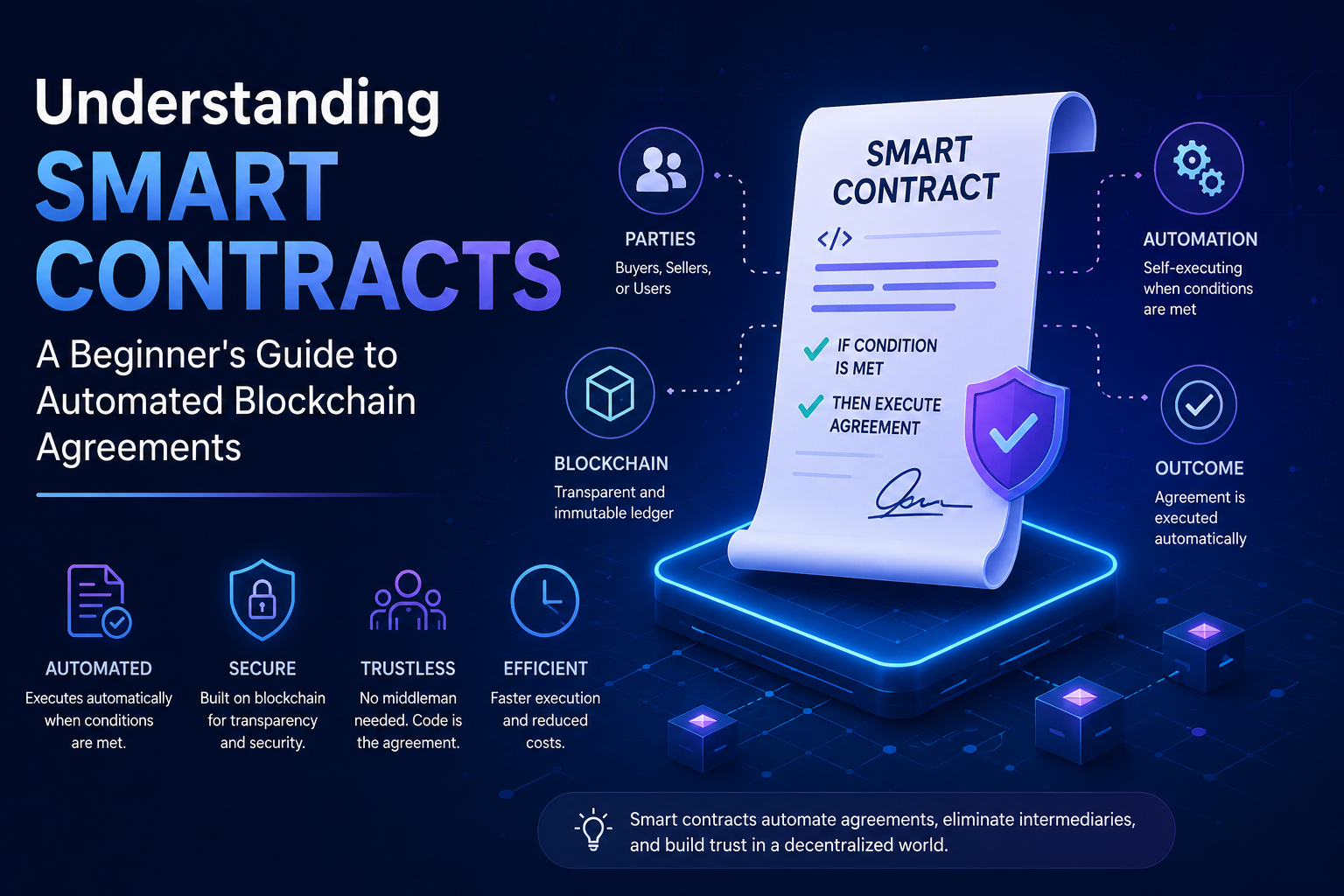
Smart contracts are self-executing contracts with the terms of the agreement directly written into code. They run on blockchain technology, which ensures that the contract is executed automatically when predetermined conditions are met. This innovative approach eliminates the need for intermediaries, making transactions faster and more efficient.
How Do Smart Contracts Work?
Smart contracts operate on blockchain platforms, with Ethereum being the most notable example. When a smart contract is created, it is stored on the blockchain and can be accessed by all parties involved. The contract executes automatically when the specified conditions are fulfilled. For instance, if a payment is made, the smart contract can automatically transfer ownership of a digital asset.
Real-World Use Cases of Smart Contracts
Smart contracts have a wide range of applications across various industries:
Finance: In the financial sector, smart contracts can automate processes like loan approvals and insurance claims. For example, if a borrower meets specific criteria, the smart contract can automatically release funds without human intervention.
Gaming: In the gaming industry, smart contracts can facilitate in-game purchases and ownership of digital assets. Players can buy, sell, or trade items securely, knowing that the transaction is handled by the contract.
NFTs (Non-Fungible Tokens): Smart contracts are essential for creating and managing NFTs. They ensure that ownership and transaction history are transparent and tamper-proof, allowing artists and creators to sell their work directly to buyers.
Business Automation: Companies can use smart contracts to streamline operations, such as supply chain management. For instance, a smart contract can automatically release payment to a supplier once goods are delivered and verified.
Benefits of Automation with Smart Contracts
The automation provided by smart contracts offers several advantages:
Speed: Transactions are executed instantly when conditions are met, reducing delays associated with traditional agreements.
Cost-Effectiveness: By eliminating intermediaries, smart contracts can lower transaction costs.
Transparency: All parties can view the contract on the blockchain, ensuring that everyone is aware of the terms and conditions.
Security: Smart contracts are secured by blockchain technology, making them resistant to tampering and fraud.
Comparing Smart Contracts to Traditional Agreements
Smart contracts differ significantly from traditional contracts:
Execution: Traditional contracts require manual enforcement, while smart contracts execute automatically.
Intermediaries: Traditional contracts often involve lawyers or notaries, whereas smart contracts operate independently on the blockchain.
Trust: In traditional agreements, trust is established through legal systems. In smart contracts, trust is built into the code and the blockchain.
Why Ethereum Made Smart Contracts Popular
Ethereum, launched in 2015, introduced the concept of smart contracts to a broader audience. Its platform allows developers to create decentralized applications (dApps) that utilize smart contracts. Ethereum's flexibility and robust community support have made it the go-to platform for smart contract development, leading to a surge in interest and innovation in this area.
Beginner Safety Note
While smart contracts offer many benefits, it's essential for beginners to exercise caution. Ensure that you understand the terms of any smart contract before engaging with it. Since these contracts are immutable, mistakes can be costly. Always use reputable platforms and conduct thorough research before participating in any blockchain-based agreements.
Common Mistakes to Avoid
Not Understanding the Contract: Always read and comprehend the terms of a smart contract before agreeing to it.
Ignoring Security Risks: Be aware of potential vulnerabilities in smart contracts. Not all contracts are created equal, and some may have flaws that can be exploited.
Assuming All Contracts Are Safe: Just because a smart contract is on the blockchain does not mean it is secure. Conduct due diligence and use trusted platforms.
Balanced Conclusion
Smart contracts represent a significant advancement in how agreements can be executed in the digital age. Their ability to automate processes, enhance security, and reduce costs makes them an attractive option for various industries. However, as with any technology, there are risks involved. By understanding how smart contracts work and being aware of common pitfalls, beginners can navigate this exciting landscape with confidence. As the world continues to embrace blockchain technology, smart contracts will likely play an increasingly vital role in shaping the future of transactions and agreements.